For Brokers
Estimate your max LTV in seconds
Pick the town, product, credit score, and how close the property is — we'll show the maximum loan-to-value we can consider. No sign-up, no obligation.
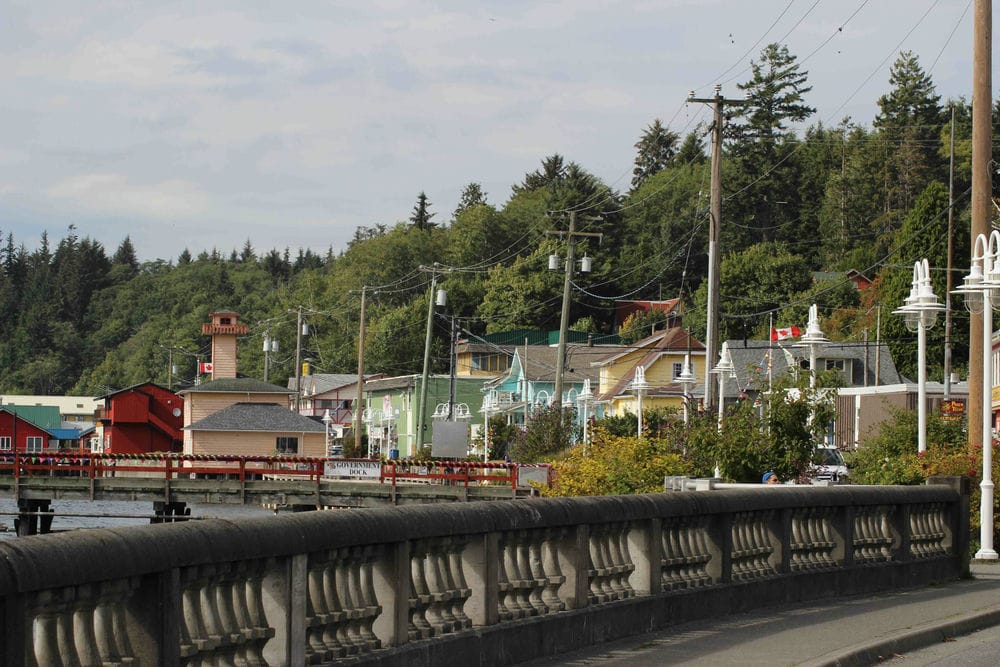
Alert Bay
Lending guidelines for Alert Bay, British Columbia
Last reviewed by Bridgefort Capital on
Show on MapLending Snapshot
Here's the deal on Alert Bay: it's an isolated island community with an aging population, high unemployment, and an incredibly illiquid housing market. Because of these heavy exit risks, Bridgefort Capital caps lending at a hard 45.0% LTV. You'll need a borrower with massive equity and deep local roots to make a deal work here.
Underwriting Alert Bay: Why Remote Island Deals Need Realistic Leverage
Alert Bay isn’t some commuter suburb of Campbell River or Port Hardy. It isn’t even on Vancouver Island proper. It sits on Cormorant Island, off the northeast coast, and the only way to get there is a 45-minute ferry ride from Port McNeill. If you are a mortgage broker looking at a file in this market, that geographic isolation is the very first thing you need to factor into your equation. This is a quiet, self-contained coastal community of just 449 people where life revolves entirely around the waterfront. It is the historic home of the ‘Namgis First Nation and Kwakwa̱ka̱’wakw culture, and while you will find the world’s tallest totem pole here, you won’t find master-planned resort developments or modern subdivisions.
Look at the local economy and you quickly realize this is a slow-growth market. The population growth has been flat at 0.0% since 2016. The median age is 52, and seniors make up a full 33% of the residents. This is not a resource-rich boomtown with high-paying private sector jobs. Instead, the local economy relies heavily on public administration, health care, and social assistance, which combined make up nearly 40% of employment. Commercial fishing and tourism-related services pick up some of the slack, but the local unemployment rate sits high at 14.3%, and household incomes are exceptionally tight. On the flip side, there is practically no gridlock. Because the entire island is a tiny 1.69 square kilometers, almost everyone has a commute under 15 minutes, with the average drive taking just 7.5 minutes.
When it comes to real estate, inventory is incredibly shallow. There are only 266 total private dwellings on the entire island, and over 77% of those are older, single-detached homes. Since land is physically limited by the ocean, new construction is rare. Buyers in this market are almost exclusively local families, retirees looking for a slow-paced lifestyle, or individuals with deep cultural connections to the area. There is no speculative flipping happening here, and it is certainly not a weekend getaway spot for Vancouver buyers.
When a deal comes across our desk at Bridgefort Capital, we have to look at it through the lens of capital preservation. Alert Bay has a lot of character, but the buyer pool for a home purchase is exceptionally small. If a borrower defaults and we have to step in, finding a qualified buyer on a remote island is a long, drawn-out process. Property taxes, winter heating, maintenance, and interest costs quickly add up during a year-long listing, which directly threatens our investors’ capital.
We do lend on Cormorant Island, but we manage our risk by keeping our exposure conservative. Because of the long recovery timelines and thin transaction volume, our maximum loan-to-value for properties in Alert Bay is capped at 45.0%.
If you have a client on the island who has deep equity in a clean, marketable single-detached home and needs a short-term bridge or debt consolidation, we can absolutely look at it. Just make sure to manage their expectations on leverage from the very first phone call.
the Nearest Tim Hortons
the Nearest Costco
Nearest Hospital
Frequently Asked Questions
Our maximum LTV is capped at 45.0% because Alert Bay is highly remote and illiquid. With a tiny, declining population and a weak local economy, pulling our capital out in a default scenario would be extremely difficult.
The economy is fragile, with a high 14.3% unemployment rate and a shift away from resources to public admin and healthcare. To get a deal approved, the borrower must have a stable, proven income stream and a clear stake in the community.
Any hint of real estate speculation, an off-island buyer with no connection to the community, or a borrower relying on future property appreciation will kill the deal immediately.
Our Mortgage Products Available in Alert Bay
| Mortgage Product Name | Max LTV | Key Notes for Alert Bay |
|---|---|---|
| Bridge Financing | 45.0% | Standard product terms |
| Purchases | 45.0% | Standard product terms |
Detailed Mortgage Product Information
Bridge Financing
Maximum Loan-to-Value (LTV) for Bridge Financing in Alert Bay:
45.0 %
“Subjects came off their current home last week but their new place closes Friday…”
Here’s a funny thing about bridge financing: everyone thinks it’s complicated. It’s not. Someone needs to close on their new house before their old house sells. Or their sale fell through after they removed subjects on their dream home. Or they found the perfect downsizer condo but haven’t listed the family hom...
Purchases
Maximum Loan-to-Value (LTV) for Purchases in Alert Bay:
45.0 %
Moving is supposed to be exciting. New town, new job, new chapter. So why do banks act like you’re asking for their firstborn when you need a mortgage?
“You haven’t been at your new job for thre months”
“Your self-employment income doesn’t count in a new market.”
“We need to see established a year if you are part time contract - even if you’re working 40 hours under your new role”
Meanwhile...