For Brokers
Estimate your max LTV in seconds
Pick the town, product, credit score, and how close the property is — we'll show the maximum loan-to-value we can consider. No sign-up, no obligation.
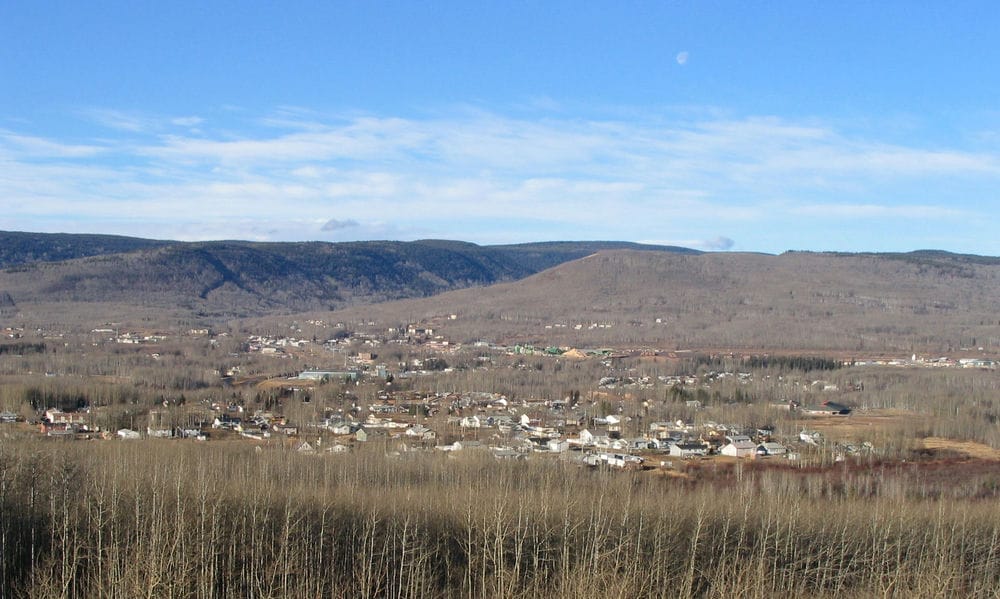
Chetwynd
Lending guidelines for Chetwynd, British Columbia
Last reviewed by Bridgefort Capital on
Show on MapLending Snapshot
Here's the deal on Chetwynd: it's a hard-working resource town, but a shrinking population means we cap our LTV at 45.0%. Forestry and gas completely dominate the economy, which brings heavy concentration risk. We'll look at deals here, but your borrower needs deep pockets and a bulletproof exit strategy.
Chetwynd Real Estate Lending
Chetwynd is the first town you hit eastbound out of the Rockies on Highway 97. It is a service hub for the surrounding area, but if you are looking at a mortgage file here, you need to know what you are actually dealing with. This isn’t a retirement spot or a speculative market. It is a blue collar resource town, plain and simple.
The local economy runs on heavy, cyclical industries. Manufacturing, mining, and oil and gas extraction make up the bulk of employment here. Because of those jobs, the median age is young, sitting right at 36 years. Nobody moves to Chetwynd for the weather. Winters are long and brutal. People move here to work hard, pull shifts, and make decent money.
For mortgage brokers, that means dealing with practical, modest housing. Single-detached houses make up 57.8% of the market, and movable dwellings account for another 13.6%. This is a purely wage-driven market, and speculative appreciation is non-existent. The population has sat completely flat at 2,302 residents since 2016. Buyers are typically industrial workers who need a reliable place to sleep between shifts. They aren’t driving far either, as 65.2% of locals have a commute under 15 minutes.
You will probably hear about the town’s international chainsaw carving championship and the 100 wooden sculptures scattered along the highway. While that is great for quick highway tourism, roadside art does not drive real estate values. When global commodity prices drop or local resource projects wrap up, housing demand dries up fast.
At Bridgefort Capital, we lend capital pooled from private individuals, meaning we always look at the worst-case scenario. If a borrower defaults in a remote town built on manufacturing and resource extraction, selling the property is a long, slow grind. Days on market stretch out, holding costs quickly eat up equity, and freezing winter weather makes property preservation a nightmare. To protect against this volatility, we cap our maximum loan-to-value in Chetwynd at 45.0%.
Even with that strict cap, we are comfortable lending in these industrial pockets. We call ourselves the MIC for towns without stoplights for a reason. We regularly fund second mortgages, debt consolidations, and bridge loans for Peace region borrowers who might have bruised credit or inconsistent resource incomes. If your client has deep equity and a clear exit strategy, we have the cash. Just remember our 45.0% LTV limit before you send over the file.
the Nearest Costco
Frequently Asked Questions
We cap lending at 45.0% LTV. This conservative limit protects against the boom-and-bust cycles of a resource-dependent economy, especially since the population has dropped by 8% since 2016.
With nearly 30% of the workforce tied to forestry, mining, and gas, the town faces major concentration risk. We need to see that your borrower has stable employment and the financial strength to weather a sector downturn.
Lack of equity is the main deal-killer—if you need more than 45.0% LTV, we can't do it. A weak exit strategy or a borrower without solid local ties will also get a quick pass, as there's no retiree or recreational buyer pool to help resell the property.
Our Mortgage Products Available in Chetwynd
| Mortgage Product Name | Max LTV | Key Notes for Chetwynd |
|---|---|---|
| Bridge Financing | 45.0% | Standard product terms |
| Equity Lending / Refinance | 45.0% | Standard product terms |
| Purchases | 45.0% | Standard product terms |
Detailed Mortgage Product Information
Bridge Financing
Maximum Loan-to-Value (LTV) for Bridge Financing in Chetwynd:
45.0 %
“Subjects came off their current home last week but their new place closes Friday…”
Here’s a funny thing about bridge financing: everyone thinks it’s complicated. It’s not. Someone needs to close on their new house before their old house sells. Or their sale fell through after they removed subjects on their dream home. Or they found the perfect downsizer condo but haven’t listed the family hom...
Equity Lending / Refinance
Maximum Loan-to-Value (LTV) for Equity Lending / Refinance in Chetwynd:
45.0 %
“They have tons of equity but don’t qualify under B20…”
Here’s the thing about equity lending: it exists because banks literally can’t do it. B20 guidelines require income verification. Full stop. No wiggle room. No common sense exceptions.
We’re provincially regulated. The funds we lend on come from individual investors, not the Bank of Canada. So when your client has 50% equity but their in...
Purchases
Maximum Loan-to-Value (LTV) for Purchases in Chetwynd:
45.0 %
Moving is supposed to be exciting. New town, new job, new chapter. So why do banks act like you’re asking for their firstborn when you need a mortgage?
“You haven’t been at your new job for thre months”
“Your self-employment income doesn’t count in a new market.”
“We need to see established a year if you are part time contract - even if you’re working 40 hours under your new role”
Meanwhile...