Hope
Lending guidelines for Hope, British Columbia
Last reviewed by Bridgefort Capital on
Show on MapLending Snapshot
Hope is a 0% LTV market for us—meaning it's a complete no-lend zone. While this highway hub has great lifestyle appeal for retirees, the local economy is too weak. With 11.6% unemployment and low household incomes, there's simply not enough economic depth to protect our investors if a deal goes sideways.
Understanding the Hope Market
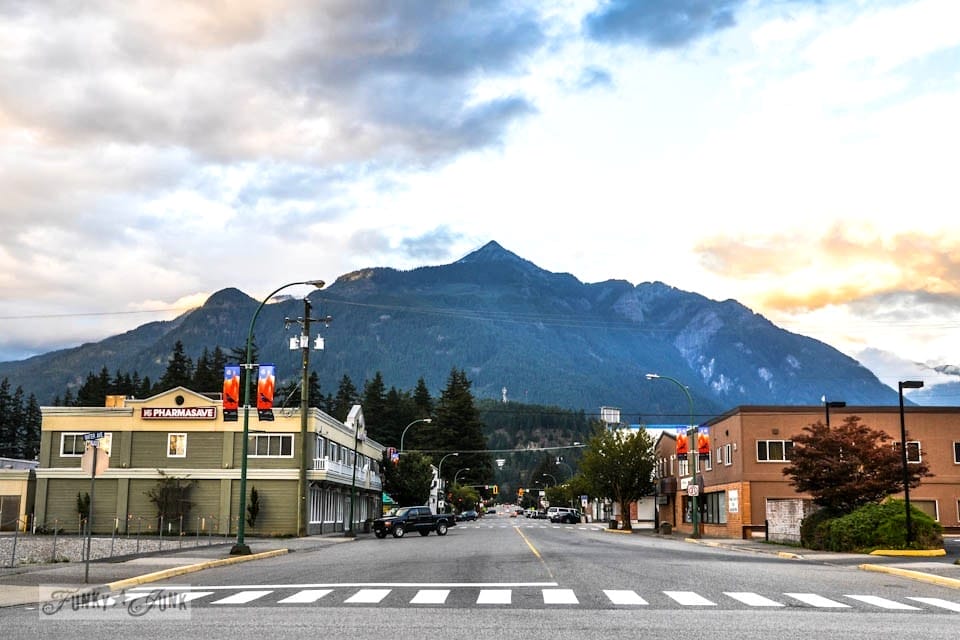
Most BC brokers only think of Hope when they’re stuck in traffic on a long weekend. It’s the ultimate highway bottleneck where Highways 1, 3, 5, and 7 all collide at the foot of the Cascade Mountains. For decades, it was just the spot where you filled up the tank and grabbed a coffee before tackling the Coquihalla or the Hope-Princeton. Today, with a population of about 6,700, it serves as a pressure valve for buyers who have been completely priced out of Chilliwack and Abbotsford.
If a Hope file lands on your desk, you’re likely looking at an older demographic. The median age here is 54, and over 31% of the population is 65 or older. Many of these clients are retirees cashing out of Metro Vancouver, moving east to stretch their home equity in a quieter setting. The housing market reflects this retirement demand, dominated by single-detached homes at 74% of the inventory, alongside a significant 8.7% share of mobile homes. It’s a market built on affordability, appealing to buyers who want to stay within a two-hour drive of the coast but don’t need to commute there daily.
The local economy doesn’t rely on a single major employer, but rather on services, construction, and retail. Retail trade represents the largest employment sector at 14%, followed closely by healthcare at 12.4% and construction at 10.4%. Accommodation and food services also play a major role, making up over 9% of local jobs due to travelers heading through the mountain passes or visiting nearby Manning Park. While it’s a stable community, household incomes run modest and the unemployment rate sits on the higher side at 11.6%.
Here is the catch for your files. Hope looks exactly like the kind of blue-collar, resource-adjacent retirement market that fits our typical profile. But we can’t write business here. Our lending guidelines are strictly limited to properties outside of Greater Vancouver and the Fraser Valley. Because Hope technically sits on the eastern tip of the Fraser Valley Regional District, it falls inside our excluded lending area. That means our maximum LTV for Hope is 0%. We do not fund deals here under any circumstances.
We built our MIC to support brokers with files in the smaller, underserved communities across BC. We love lending in resource hubs and retirement towns where coastal equity is migrating. But geographic boundaries are absolute. If your clients are looking even twenty minutes further up the highway to places like Merritt, Princeton, or Kamloops, we want to see those deals immediately. If they’re buying inside the Hope town boundaries, you’ll have to look to Lower Mainland alternative lenders or credit unions to get the deal done.
the Nearest Costco
Frequently Asked Questions
Our max LTV is 0.0% because Hope is a hard no-lend zone. The economic risks are just too high to guarantee principal protection for our investors.
It's highly vulnerable, with an 11.6% unemployment rate and a low median household income of $64,000. This weak economic foundation means we can't fund any deals in this market.
The location itself sinks the deal since it's a non-lending area. If a foreclosure happened, the combination of high unemployment and low housing turnover makes a worst-case recovery too risky.
Our Mortgage Products Available in Hope
No Mortgage Products Available Yet
Unfortunately, we currently don't have any mortgage products listed for Hope.
Please check back soon, or contact support if you need assistance.