For Brokers
Estimate your max LTV in seconds
Pick the town, product, credit score, and how close the property is — we'll show the maximum loan-to-value we can consider. No sign-up, no obligation.
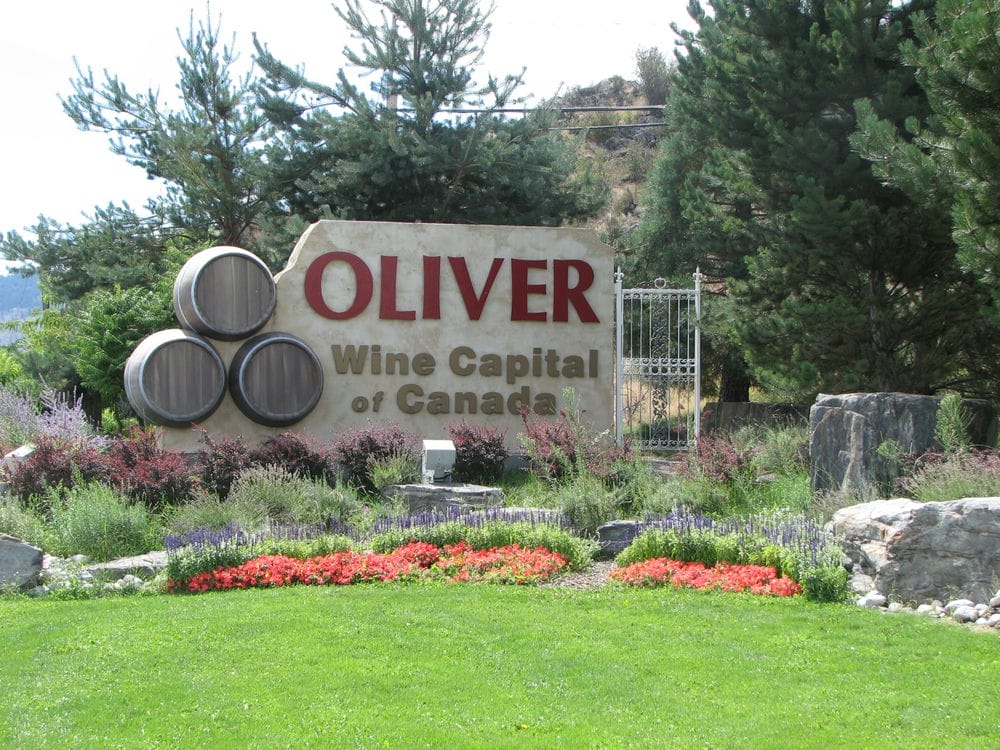
Oliver
Lending guidelines for Oliver, British Columbia
Last reviewed by Bridgefort Capital on
Show on MapLending Snapshot
Here's the deal on Oliver: we cap out at 60.0% LTV in this small agricultural-resort market. The local economy relies heavily on out-of-town retirement equity rather than local jobs. It’s a highly stable lifestyle hub, but liquidity is thin and properties take longer to sell.
Lending in Oliver: A South Okanagan Perspective
Oliver is often marketed as a wine-country destination, but as a mortgage lender, we view it as the primary service and agricultural hub of the South Okanagan. Positioned directly on Highway 97 between Penticton and Osoyoos, this community supports a steady local economy. With a population of 5,094, the town itself is geographically compact, but it serves as an essential economic anchor for the surrounding rural valley. For Bridgefort Capital, Oliver represents a stable, secondary market where major banks often pull back, creating a solid opportunity for equity-based lending.
Real estate supply here faces natural and regulatory constraints. Oliver occupies just 5.49 square kilometers, squeezed into the valley bottom and hemmed in by the Agricultural Land Reserve. Because the municipality cannot easily expand outward into protected farmland, the housing inventory remains tight. Single-detached homes make up the majority of the market at 66.5%, while row houses and apartments under five storeys account for 12.7% and 11.7% respectively.
These market dynamics shape the borrowers we see. Demographically, Oliver is an older community. The median age is 58, and seniors aged 65 and over make up 37% of the population. We frequently review applications from retirees who are asset-rich but income-poor. They might have substantial equity locked up in a single-detached home or a townhouse, but they cannot satisfy a traditional bank’s strict debt-service ratios on a fixed pension. We also see seasonal and self-employed files. While healthcare, retail, and accommodation services drive the official employment numbers—accounting for over 37% of local jobs—the seasonal nature of the region’s agricultural and tourism sectors means many borrowers have fluctuating, non-traditional incomes. These borrowers are highly creditworthy but do not fit neatly into a credit union’s automated underwriting box.
When underwriting in Oliver, local liquidity is our primary metric. Because the total market area is small, assets can take longer to turn over during economic slowdowns or the quiet winter months. As a lender utilizing private capital, protecting our investors’ principal is paramount. We account for these potentially longer marketing times and carrying costs by keeping our leverage conservative.
To manage this risk, our maximum loan-to-value ratio in Oliver is capped at 60.0%.
This limit provides a necessary safety margin while still giving mortgage brokers a reliable alternative for unconventional deals. Whether you are dealing with a retired homeowner looking to access equity for renovations, or a self-employed business owner needing a short-term bridge loan, we look at the real estate and the borrower’s exit strategy rather than just their tax returns. We know the South Okanagan market, we understand the local geography, and we provide fast, clear answers so you can close your deal.
the Nearest Costco
Frequently Asked Questions
Our maximum LTV is 60.0% because Oliver is a small, rural-resort market with thin liquidity. This conservative cap protects us against the longer sales cycles typical of this area if a property has to go to a forced sale.
It’s a stable wine and retirement hub, but local incomes are low and unemployment is high. Deals here get done when buyers are retirees bringing equity from major markets like Vancouver or Calgary, rather than relying on local employment.
Relying on local incomes to qualify the borrower or submitting a property that doesn't fit the dominant retiree demographic will kill the deal. We need borrowers who fit the local market profile and properties that have broad lifestyle appeal.
Our Mortgage Products Available in Oliver
| Mortgage Product Name | Max LTV | Key Notes for Oliver |
|---|---|---|
| Credit Repair and Debt Consolidation | 60.0% | Standard product terms |
| Variable Income | 60.0% | Standard product terms |
| Bare Land and Unique Properties | 60.0% | Standard product terms |
| Bridge Financing | 60.0% | Standard product terms |
| Equity Lending / Refinance | 60.0% | Standard product terms |
| Purchases | 60.0% | Standard product terms |
Detailed Mortgage Product Information
Credit Repair and Debt Consolidation
Maximum Loan-to-Value (LTV) for Credit Repair and Debt Consolidation in Oliver:
60.0 %
“Their credit report reads like a horror novel, but the house was just renovated and is worth a lot…”
Here’s what happens when life takes a wrong turn. A bad business venture. Workplace Injury. That divorce that dragged on for two years. Suddenly your credit score looks like a batting average and the banks won’t even return your calls.
But here’s the thing – none of that changes what your ho...
Variable Income
Maximum Loan-to-Value (LTV) for Variable Income in Oliver:
60.0 %
“Their income is all over the map, but there’s definitely income…”
Here’s a funny thing about lending based on Line 15000 of your Notice of Assessment: It’s a neat little box to underwrite against. Works great if you’re a salaried employee. Not so great if you’re running a fishing charter in Campbell River where thres fishing season, and the rest of the year.
We get it. Income isn’t always ti...
Bare Land and Unique Properties
Maximum Loan-to-Value (LTV) for Bare Land and Unique Properties in Oliver:
60.0 %
“The appraisal came back as ‘property type: other’…”
Here’s a truth about real estate that nobody wants to admit: not everything fits in a box. Banks have boxes. Nice, tidy boxes labeled “single family home” and “condo” and “townhouse.” Their computer systems literally don’t have a dropdown menu option for “converted church with commercial kitchen” or “geodesic dome on 40 acres.”
We’ve funded...
Bridge Financing
Maximum Loan-to-Value (LTV) for Bridge Financing in Oliver:
60.0 %
“Subjects came off their current home last week but their new place closes Friday…”
Here’s a funny thing about bridge financing: everyone thinks it’s complicated. It’s not. Someone needs to close on their new house before their old house sells. Or their sale fell through after they removed subjects on their dream home. Or they found the perfect downsizer condo but haven’t listed the family hom...
Equity Lending / Refinance
Maximum Loan-to-Value (LTV) for Equity Lending / Refinance in Oliver:
60.0 %
“They have tons of equity but don’t qualify under B20…”
Here’s the thing about equity lending: it exists because banks literally can’t do it. B20 guidelines require income verification. Full stop. No wiggle room. No common sense exceptions.
We’re provincially regulated. The funds we lend on come from individual investors, not the Bank of Canada. So when your client has 50% equity but their in...
Purchases
Maximum Loan-to-Value (LTV) for Purchases in Oliver:
60.0 %
Moving is supposed to be exciting. New town, new job, new chapter. So why do banks act like you’re asking for their firstborn when you need a mortgage?
“You haven’t been at your new job for thre months”
“Your self-employment income doesn’t count in a new market.”
“We need to see established a year if you are part time contract - even if you’re working 40 hours under your new role”
Meanwhile...