For Brokers
Estimate your max LTV in seconds
Pick the town, product, credit score, and how close the property is — we'll show the maximum loan-to-value we can consider. No sign-up, no obligation.
Port Alice
Lending guidelines for Port Alice, British Columbia
Last reviewed by Bridgefort Capital on
Show on MapLending Snapshot
Here’s the deal on Port Alice: it’s a remote, former mill town on Vancouver Island where we cap out at 60.0% LTV. Since the pulp mill shut, the local economy is shaky, leaving a tiny buyer pool of retirees and outdoorsmen. Properties here can take up to nine months to sell, so we need that heavy equity cushion.
Port Alice Lending Landscape
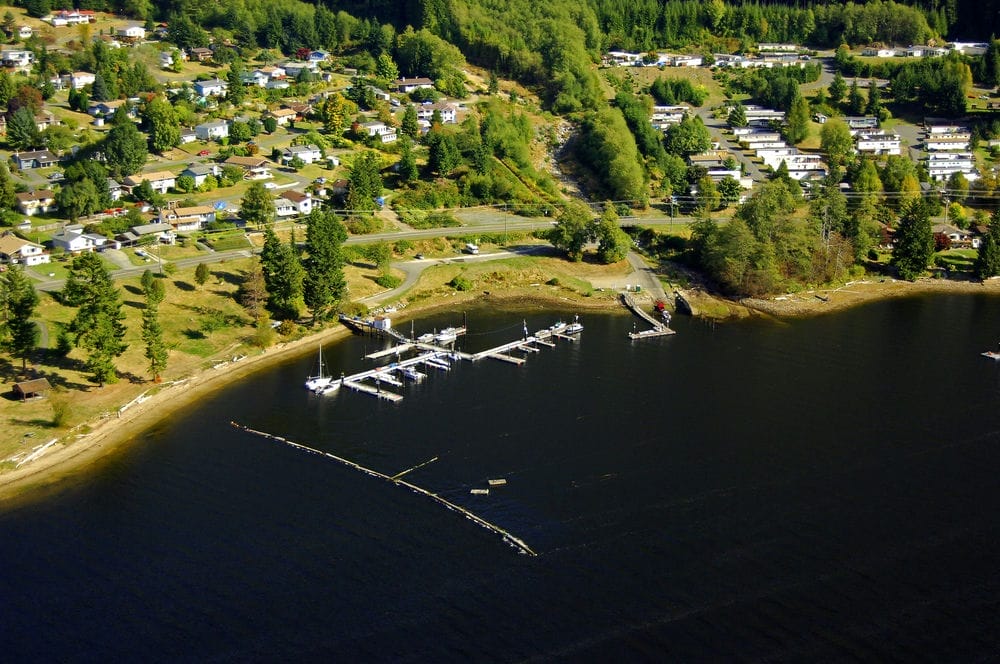
Port Alice sits right at the end of Highway 30 on Northern Vancouver Island, built on the steep hills overlooking Neroutsos Inlet. It is about a 45-minute drive from Port Hardy or Port McNeill. Unlike most coastal communities that grew organically, this entire village was planned and physically relocated in the 1960s to support the local mill. Because of the terraced hillside layout, a massive portion of the properties here have unobstructed, panoramic ocean views. Today, it is a quiet, highly walkable community with a stable population of 739 residents.
Economic Realities and Industry Shifts
When you are looking at deals in this market, you have to understand the economic backdrop. Port Alice was a classic single-industry town, built around a pulp mill that shut down permanently years ago. The community is still managing that transition. Unemployment sits at 14.5%, and local household incomes are low. While the town is actively marketing itself as a hub for eco-tourism, sea kayaking, and sport fishing, the active local economy is small. The current job market is mostly made up of remote workers, healthcare staff, small retail workers, and seasonal tourism employees.
Real Estate Dynamics and Demographics
Because local high-paying jobs are scarce, the real estate market is heavily driven by out-of-town buyers. The median age here is 58, and seniors over 65 make up a third of the total population. We see a lot of retirees relocating from high-priced markets like Victoria or Vancouver, along with remote professionals and recreational buyers looking for affordable summer cabins. The local housing stock matches this demographic: about 53% of the inventory consists of single-detached homes, while the rest is split between row houses at 29% and a handful of low-rise apartment buildings.
Our Underwriting Approach
At Bridgefort Capital, we do not shy away from former resource towns. We like that the entry prices are highly accessible and the coastal views keep demand consistent for retirees and vacationers. However, as an alternative lender, we have to account for liquidity risks. If a borrower defaults, selling a property in a remote community takes significantly longer than it does in a major urban center. To manage this exposure while still supporting the market, our maximum loan-to-value in Port Alice is capped at 60%.
Packaging Your Deal
If you have a client with the 40% equity or down payment, we want to see the file. We regularly look at equity take-outs for retirees, debt consolidation for remote workers, and bridge loans for buyers waiting on their subject properties to sell down island. Bring us a clean, recent appraisal and a clearly defined exit strategy. Do that, and our underwriting team will get you a quick, common-sense decision.
the Nearest Tim Hortons
the Nearest Costco
Nearest Hospital
Frequently Asked Questions
We cap LTV at 60.0% because it’s a remote market with a very thin buyer pool. If a deal goes sideways, it could take 6 to 9 months and a 15-25% price drop to sell the property.
With the pulp mill closed and unemployment at 14.5%, the local economy is highly vulnerable. Because of this, we need to see a rock-solid borrower with stable income who isn't relying on the local job market.
A deal will fall apart instantly if there isn't at least 40% equity. We'll also pass on properties that don't appeal to the retirees or lifestyle buyers who make up the bulk of this market.
Our Mortgage Products Available in Port Alice
| Mortgage Product Name | Max LTV | Key Notes for Port Alice |
|---|---|---|
| Bridge Financing | 60.0% | Standard product terms |
| Equity Lending / Refinance | 60.0% | Standard product terms |
| Purchases | 60.0% | Standard product terms |
Detailed Mortgage Product Information
Bridge Financing
Maximum Loan-to-Value (LTV) for Bridge Financing in Port Alice:
60.0 %
“Subjects came off their current home last week but their new place closes Friday…”
Here’s a funny thing about bridge financing: everyone thinks it’s complicated. It’s not. Someone needs to close on their new house before their old house sells. Or their sale fell through after they removed subjects on their dream home. Or they found the perfect downsizer condo but haven’t listed the family hom...
Equity Lending / Refinance
Maximum Loan-to-Value (LTV) for Equity Lending / Refinance in Port Alice:
60.0 %
“They have tons of equity but don’t qualify under B20…”
Here’s the thing about equity lending: it exists because banks literally can’t do it. B20 guidelines require income verification. Full stop. No wiggle room. No common sense exceptions.
We’re provincially regulated. The funds we lend on come from individual investors, not the Bank of Canada. So when your client has 50% equity but their in...
Purchases
Maximum Loan-to-Value (LTV) for Purchases in Port Alice:
60.0 %
Moving is supposed to be exciting. New town, new job, new chapter. So why do banks act like you’re asking for their firstborn when you need a mortgage?
“You haven’t been at your new job for thre months”
“Your self-employment income doesn’t count in a new market.”
“We need to see established a year if you are part time contract - even if you’re working 40 hours under your new role”
Meanwhile...