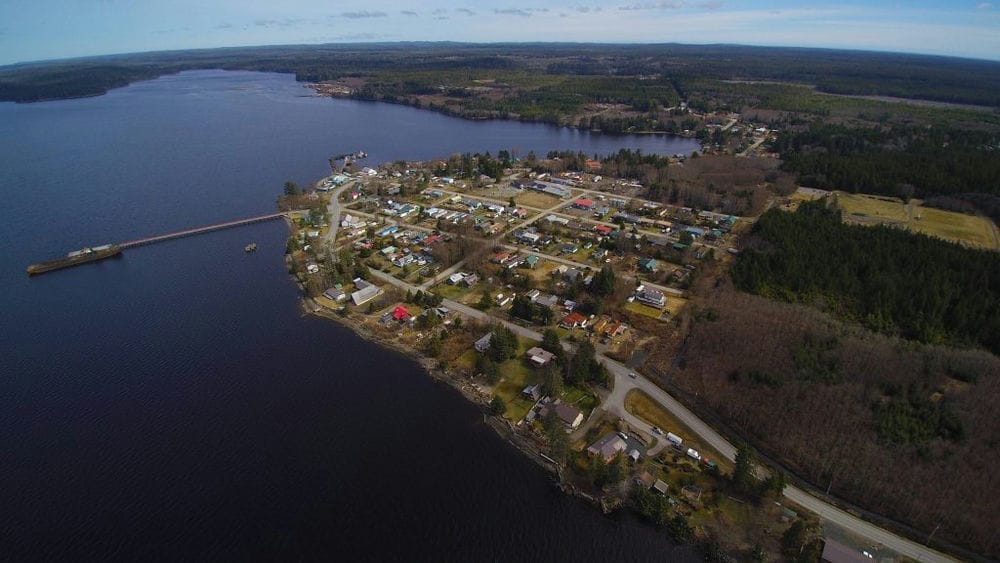
Port Clements
Lending guidelines for Port Clements, British Columbia
Last reviewed by Bridgefort Capital on
Show on MapLending Snapshot
Here's the deal on Port Clements: we can't touch it, so our max LTV is 0.0%. It’s a tiny, remote working village of just 340 people on Haida Gwaii that lives and dies by forestry. Because the real estate market is totally illiquid and there's no reliable exit strategy if a borrower defaults, we have to pass.
Analyzing Port Clements: Why We Do Not Lend Here
Let’s look closely at Port Clements, a remote forestry village of 340 people situated on the east end of Masset Inlet in Haida Gwaii. While the community has seen some nominal population growth of 20.6% since 2016, the underlying fundamentals make it an impossible market for private mortgage lending. For brokers looking to place files here, understanding the structural limitations of this market is essential.
First, consider the employment concentration. Nearly half the local workforce—specifically 48.3%—is employed in agriculture, forestry, fishing, and hunting. While resource towns are common in British Columbia, this level of single-industry reliance is a major underwriting concern. When the local timber or fishing market experiences a downturn, the entire local economy stalls. The employment rate sits at 51.9%, with an unemployment rate of 6.9%. The rest of the job market consists of thin slices: construction at 17.2%, health care at 13.8%, and retail at 6.9%. Furthermore, the median household income is recorded at just $67 in the latest census profile data. Combine these metrics, and the community’s economic score sits at a 2/10.
Demographics present another challenge. The median age in Port Clements is 50 years. Seniors aged 65 and older make up 26% of the population, while youth under 15 make up only 10%. This is an aging, stagnant demographic profile, not an active market of young buyers entering the property ladder.
From a housing perspective, the market is virtually non-existent. There are only 205 total private dwellings in the entire 13.07 square kilometer area. Single-detached houses make up 80.6% of the inventory, and movable dwellings account for another 13.9%. There are zero row houses or duplexes. In a market this thin, establishing reliable comparables is nearly impossible. A single distress sale can wipe out perceived equity overnight.
If a borrower defaults in a remote location like Haida Gwaii, the liquidation process is a logistical nightmare. Foreclosure is slow, and holding a property through wet coastal winters incurs massive maintenance costs. Transporting materials or trades to the island requires a ferry or barge, dramatically increasing repair costs. With a tiny pool of potential buyers and a low desirability score of 6/10, a property could sit on the market for years.
To protect investor capital, we must be realistic about exit strategies. Because of the extreme isolation, minimal liquidity, and severe economic concentration, our maximum loan-to-value for Port Clements is 0%.
This means Port Clements is an excluded lending area for us. If you have clients looking to purchase or refinance in this area, they will need to look to local credit unions or alternative niche lenders who specialize in remote island properties. For your active deals on the mainland or in more liquid BC markets, our team remains ready to review your files.
the Nearest Tim Hortons
the Nearest Costco
Nearest Hospital
Frequently Asked Questions
Our max LTV is 0.0% because the market is completely illiquid. With its extreme isolation and tiny buyer pool, trying to unload a property in a foreclosure would take an eternity and eat up investor capital.
Nearly half the workforce relies entirely on forestry. This extreme reliance on one cyclical resource sector makes the local economy way too unstable for us to lend against.
The location itself is the deal-breaker. Between the 0.0% LTV cap, the lack of standard housing types, and the absolute lack of market liquidity, there is simply no way to get a deal done here.
Our Mortgage Products Available in Port Clements
No Mortgage Products Available Yet
Unfortunately, we currently don't have any mortgage products listed for Port Clements.
Please check back soon, or contact support if you need assistance.