For Brokers
Estimate your max LTV in seconds
Pick the town, product, credit score, and how close the property is — we'll show the maximum loan-to-value we can consider. No sign-up, no obligation.
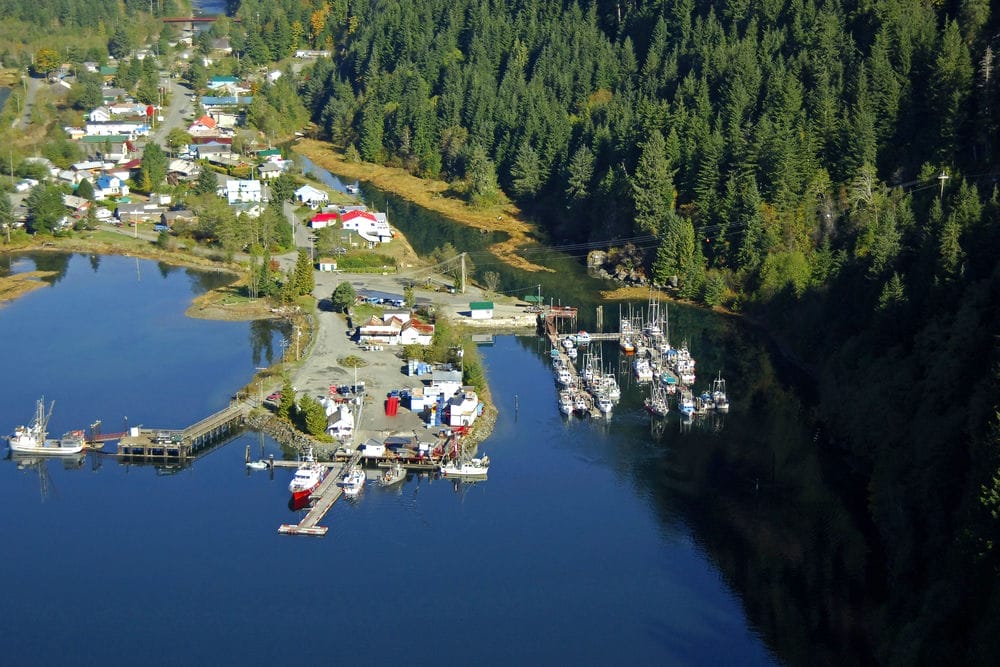
Zeballos
Lending guidelines for Zeballos, British Columbia
Last reviewed by Bridgefort Capital on
Show on MapLending Snapshot
Zeballos is an ultra-remote, end-of-the-road resource town of just 126 people on Vancouver Island. Because the market is tiny, heavily reliant on forestry, and exposed to flood risks, we cap our LTV at a conservative 35.0%. There’s basically zero liquidity here, so any deal needs massive equity and a bulletproof story to get across the finish line.
Underwriting in Zeballos: Navigating Vancouver Island’s Deep Coast
For brokers writing files on Vancouver Island, Zeballos represents the absolute limit of remote lending. Located at the end of a long gravel logging road off the highway north of Campbell River, this ocean inlet community is not a commuter hub. It is a highly isolated settlement of 126 residents. While the population has actually grown by 17.8% since 2016, the market here remains exceptionally tight and illiquid. If you have a client looking to purchase in this area, you need to understand how we evaluate the real estate risk.
The housing stock in Zeballos is extremely limited. There are only 109 total private dwellings in the entire 1.55-square-kilometer municipality. Single-detached houses make up 85.7% of the market, with the remainder split evenly between duplexes (7.1%) and movable dwellings (7.1%). There are zero apartments or row houses. Because of this tiny inventory, transactions are rare. When a property does hit the MLS, finding a buyer can take months, if not years. This long liquidation timeline is the primary driver behind our conservative lending parameters.
From an economic perspective, Zeballos operates on a micro scale. The median age is 50 years, with seniors making up 23% of the population and working-age residents comprising 65%. Interestingly, the employment rate sits at 50.0% with a 0.0% reported unemployment rate. While historically rooted in forestry and commercial fishing, today’s largest employment sector is actually health care and social assistance, accounting for 22.2% of local jobs. Commute times are non-existent; 100.0% of working residents have a commute under 15 minutes, averaging just 7.5 minutes.
At Bridgefort Capital, we use private investor capital, which means capital preservation is our primary focus. If we have to foreclose on a property in an isolated inlet with no highway access, we must be prepared to carry that asset for a long period. To mitigate this carrying risk, we cap our maximum loan-to-value in Zeballos at 35.0%.
We score this community’s desirability at 7/10 and its economic strength at 6/10. We are absolutely willing to write mortgages in remote resource and coastal towns like Zeballos—in fact, our alternative guidelines are designed to look past the restrictions of institutional lenders. However, the borrower must have significant equity. If your client has the required down payment and understands the realities of rural coastal property ownership, we want to see the deal. Just manage expectations regarding leverage from day one. Zeballos offers unmatched access to Nootka Sound, but from a credit perspective, we must keep our exposure highly conservative.
the Nearest Tim Hortons
the Nearest Costco
Nearest Hospital
Frequently Asked Questions
We cap the LTV at 35.0% because of the extreme risk profile. With only 109 homes in the entire town and zero market liquidity, exiting a property in Zeballos takes a very long time.
It’s a single-industry forestry town with no professional class, so the economy is highly volatile. To get a deal done, your borrower needs to be a well-capitalized local or have a highly specific, logical reason to buy here.
Any property sitting in high-risk zones for coastal flooding or landslide debris flows will be a hard no. Speculative flips or files with weak equity will also get tossed immediately.
Our Mortgage Products Available in Zeballos
| Mortgage Product Name | Max LTV | Key Notes for Zeballos |
|---|---|---|
| Bridge Financing | 35.0% | Standard product terms |
| Equity Lending / Refinance | 35.0% | Standard product terms |
| Purchases | 35.0% | Standard product terms |
Detailed Mortgage Product Information
Bridge Financing
Maximum Loan-to-Value (LTV) for Bridge Financing in Zeballos:
35.0 %
“Subjects came off their current home last week but their new place closes Friday…”
Here’s a funny thing about bridge financing: everyone thinks it’s complicated. It’s not. Someone needs to close on their new house before their old house sells. Or their sale fell through after they removed subjects on their dream home. Or they found the perfect downsizer condo but haven’t listed the family hom...
Equity Lending / Refinance
Maximum Loan-to-Value (LTV) for Equity Lending / Refinance in Zeballos:
35.0 %
“They have tons of equity but don’t qualify under B20…”
Here’s the thing about equity lending: it exists because banks literally can’t do it. B20 guidelines require income verification. Full stop. No wiggle room. No common sense exceptions.
We’re provincially regulated. The funds we lend on come from individual investors, not the Bank of Canada. So when your client has 50% equity but their in...
Purchases
Maximum Loan-to-Value (LTV) for Purchases in Zeballos:
35.0 %
Moving is supposed to be exciting. New town, new job, new chapter. So why do banks act like you’re asking for their firstborn when you need a mortgage?
“You haven’t been at your new job for thre months”
“Your self-employment income doesn’t count in a new market.”
“We need to see established a year if you are part time contract - even if you’re working 40 hours under your new role”
Meanwhile...