For Brokers
Estimate your max LTV in seconds
Pick the town, product, credit score, and how close the property is — we'll show the maximum loan-to-value we can consider. No sign-up, no obligation.
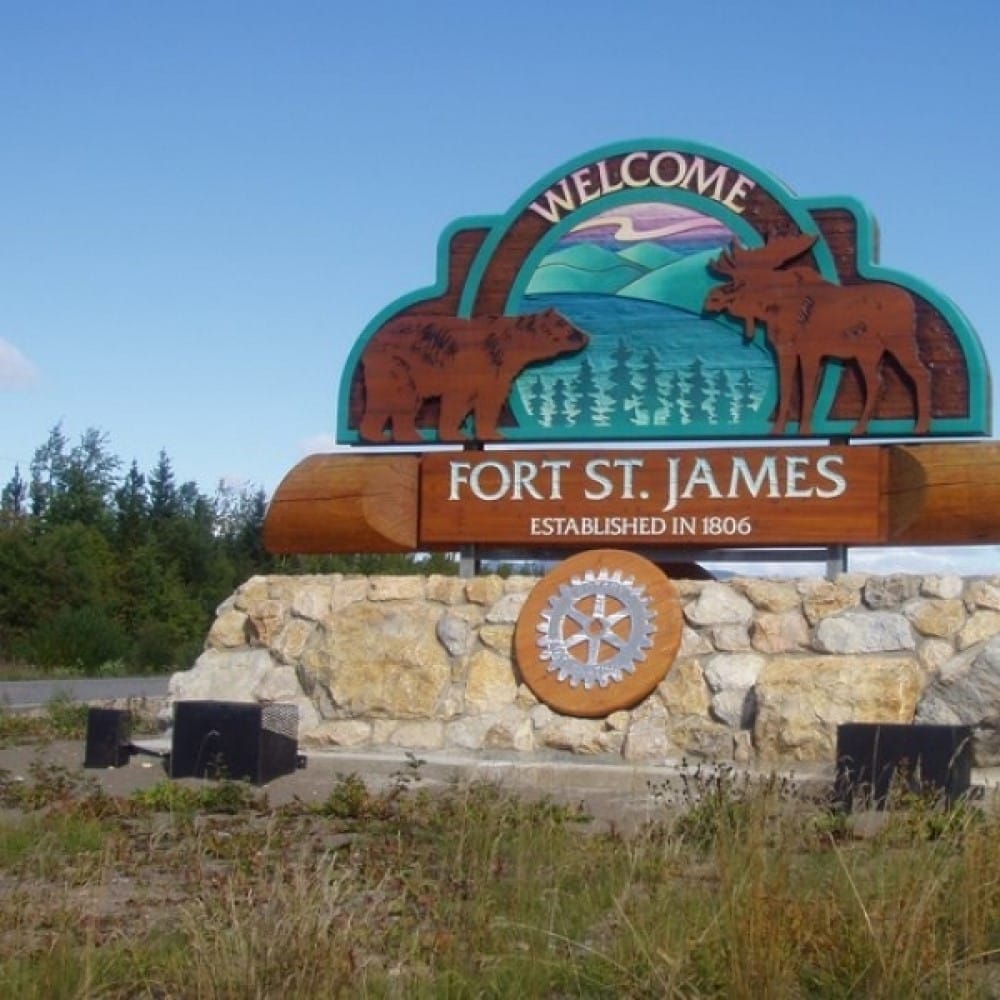
Fort St. James
Lending guidelines for Fort St. James, British Columbia
Last reviewed by Tekamar Mortgage Fund on
Show on MapLending Snapshot
Fort St. James is a remote, shrinking resource town where the local market can completely freeze up if forestry takes a hit. Because of this high illiquidity risk, Tekamar caps LTV at 45.0%. If your client has deep equity and a clean file, we can look at it, but leverage must be extremely low.
Lending in Fort St. James
Fort St. James isn’t on the radar for most coastal lenders, which is exactly why we look at deals here. It sits about 60 kilometers north of Vanderhoof at the end of Highway 27, and it’s one of the oldest settled communities in the BC interior. The municipal population is small—just 1,386 residents with flat growth since 2016. However, rural properties and the neighboring Nak’azdli Whut’en First Nation bring the actual local headcount closer to 4,500. It’s a quiet, isolated spot built for people who prefer lake fishing and snowmobiling to city amenities.
To write a mortgage up here, you have to understand how the local economy behaves. This is not a speculative market. People buy houses because they need a place to live, not to flip them. While forestry, sawmills, and mining exploration historically pay the bills, the steadier paychecks actually come from healthcare, retail, and manufacturing. Health care and social assistance make up 17.6% of local employment, followed by retail trade at 12.5% and manufacturing at 10.3%. The local employment rate is 58.3%, and the unemployment rate sits at 9.6%. It is a functional blue-collar economy, but it remains highly sensitive to commodity market shifts and sawmill closures.
The housing stock reflects this utility. Single-detached houses make up 73.5% of the market, with apartments under five storeys accounting for 12.0% and movable dwellings at 4.3%. Real estate prices are low compared to Prince George, but liquidity is the major hurdle. Selling a property here takes time. In a town where major shopping and specialized hospital visits require a drive down the highway, the buyer pool is naturally small.
Lending in the deep interior
At Tekamar, we call ourselves the MIC for towns without stoplights. We step in to lend in places like Fort St. James when credit unions tighten up and traditional private lenders won’t cross the Rockies. Even so, our decisions are always based on worst-case recovery.
If a borrower defaults in a remote northern town, the property is going to sit on the market. Foreclosures take longer, interest piles up, and keeping a house heated through a sub-zero winter eats directly into capital recovery. Since we invest money for friends and family, protecting that principal is our main job.
Between the slow real estate turnover, the cyclical economy, and the physical isolation, we cap our maximum loan-to-value in Fort St. James at 45.0%.
That leverage gives us enough cushion to get through a long foreclosure if things go sideways. For brokers, this means we are open for business here if the borrower has real equity. Whether your client needs a debt consolidation loan or a second mortgage to bridge a transition, we can write the deal. Just make sure they have a clear exit strategy, the property is in decent shape, and everyone’s expectations match our regional limits.
the Nearest Tim Hortons
the Nearest Costco
Frequently Asked Questions
We cap exposure at 45.0% LTV because the town's remote location and shrinking population mean a foreclosed home could easily sit vacant for a year or more, chewing up equity in carrying costs.
The economy is heavily reliant on forestry and has a high 9.6% unemployment rate, so we require straightforward files with strong borrower character to offset the weak local market.
Any deal with high leverage, a messy file, or a weak borrower will be rejected immediately, as we strictly require a substantial equity buffer to offset the uncertain exit strategy.
Our Mortgage Products Available in Fort St. James
| Mortgage Product Name | Max LTV | Key Notes for Fort St. James |
|---|---|---|
| Credit Repair and Debt Consolidation | 45.0% | Standard product terms |
| Variable Income | 45.0% | Standard product terms |
| Bridge Financing | 45.0% | Standard product terms |
| Equity Lending / Refinance | 45.0% | Standard product terms |
| Purchases | 45.0% | Standard product terms |
Detailed Mortgage Product Information
Credit Repair and Debt Consolidation
Maximum Loan-to-Value (LTV) for Credit Repair and Debt Consolidation in Fort St. James:
45.0 %
“Their credit report reads like a horror novel, but the house was just renovated and is worth a lot…”
Here’s what happens when life takes a wrong turn. A bad business venture. Workplace Injury. That divorce that dragged on for two years. Suddenly your credit score looks like a batting average and the banks won’t even return your calls.
But here’s the thing – none of that changes what your ho...
Variable Income
Maximum Loan-to-Value (LTV) for Variable Income in Fort St. James:
45.0 %
“Their income is all over the map, but there’s definitely income…”
Here’s a funny thing about lending based on Line 15000 of your Notice of Assessment: It’s a neat little box to underwrite against. Works great if you’re a salaried employee. Not so great if you’re running a fishing charter in Campbell River where thres fishing season, and the rest of the year.
We get it. Income isn’t always ti...
Bridge Financing
Maximum Loan-to-Value (LTV) for Bridge Financing in Fort St. James:
45.0 %
“Subjects came off their current home last week but their new place closes Friday…”
Here’s a funny thing about bridge financing: everyone thinks it’s complicated. It’s not. Someone needs to close on their new house before their old house sells. Or their sale fell through after they removed subjects on their dream home. Or they found the perfect downsizer condo but haven’t listed the family hom...
Equity Lending / Refinance
Maximum Loan-to-Value (LTV) for Equity Lending / Refinance in Fort St. James:
45.0 %
“They have tons of equity but don’t qualify under B20…”
Here’s the thing about equity lending: it exists because banks literally can’t do it. B20 guidelines require income verification. Full stop. No wiggle room. No common sense exceptions.
We’re provincially regulated. The funds we lend on come from individual investors, not the Bank of Canada. So when your client has 50% equity but their in...
Purchases
Maximum Loan-to-Value (LTV) for Purchases in Fort St. James:
45.0 %
Moving is supposed to be exciting. New town, new job, new chapter. So why do banks act like you’re asking for their firstborn when you need a mortgage?
“You haven’t been at your new job for thre months”
“Your self-employment income doesn’t count in a new market.”
“We need to see established a year if you are part time contract - even if you’re working 40 hours under your new role”
Meanwhile...