For Brokers
Estimate your max LTV in seconds
Pick the town, product, credit score, and how close the property is — we'll show the maximum loan-to-value we can consider. No sign-up, no obligation.
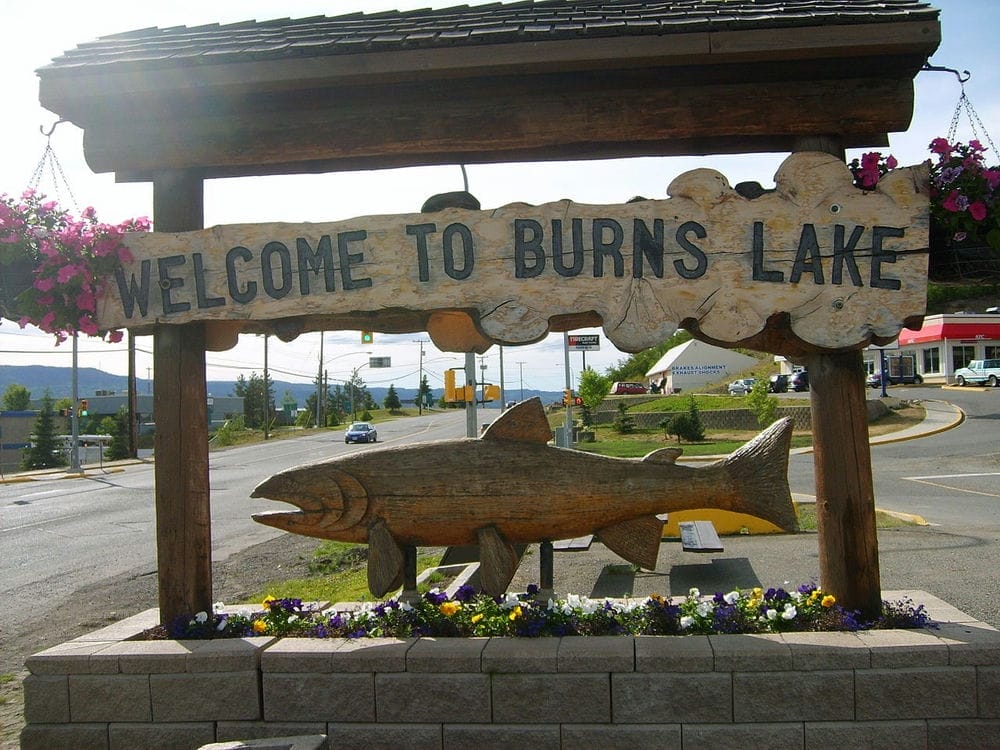
Burns Lake
Lending guidelines for Burns Lake, British Columbia
Last reviewed by Bridgefort Capital on
Show on MapLending Snapshot
Burns Lake is a rugged regional hub, but with a shrinking population and slow sales, we cap our LTV at 50.0%. Public sector jobs keep the core stable, but properties take a long time to sell if things go sideways. We need that extra equity cushion to offset the lack of market liquidity.
Local Economic Profile
Burns Lake sits along Highway 16 in British Columbia’s north-central Interior. The community serves as a central service hub for the surrounding Lakes District, supporting rural properties and regional First Nations. The local population is stable, recorded at 1,659 residents with 0.0% growth since 2016. This lack of population growth indicates a stagnant real estate market rather than a speculative one. Property values here do not experience rapid appreciation; instead, the market remains highly practical and driven by local utility rather than investment demand. The land area is compact at 6.54 square kilometers, resulting in a population density of 253.7 people per square kilometer.
The local economy is anchored heavily by the public sector, which provides a stable employment base for the region. Educational services account for 15.8% of employment, healthcare and social assistance make up 12.4%, and public administration contributes 11.3%. Together, these three sectors represent nearly 40% of the local workforce. Industrial employment remains relevant, with manufacturing (primarily forestry and wood products) employing 9.6% of workers, and retail trade accounting for 7.9%. The employment rate is 63.3%, while the unemployment rate sits at 7.9%. Although the unemployment rate is somewhat elevated, the workforce is highly localized; 72.1% of residents have a commute of under 15 minutes, and the average commute time is 15.3 minutes. This economic profile supports a stable but low-growth environment, earning the community an economic score of 7/10.
Housing Market and Demographics
The housing stock in Burns Lake consists of 765 total private dwellings. Single-detached houses are the dominant housing type, representing 64.2% of the market. Apartments in buildings with fewer than five storeys make up 17.5%, while row houses and movable dwellings each account for 5.8%, and duplexes comprise 2.9%. The median age of residents is 39 years, with working-age individuals (15-64) making up 61% of the population, seniors (65+) at 20%, and youth (0-14) at 18%. Buyers in this market are typically long-term residents, local tradespeople, or public sector employees. Real estate transaction volumes are low, meaning listings can remain on the market for extended periods. There is no external metropolitan demand to absorb excess inventory, making properties highly illiquid.
Bridgefort Capital Underwriting Parameters
At Bridgefort Capital, we evaluate Burns Lake with a realistic understanding of these liquidity constraints. The community desirability score is 5/10, reflecting its remote location and slow market dynamics. In small, northern resource-adjacent communities, conventional lenders often retract their programs. While we provide alternative financing solutions—such as equity loans, second mortgages, and debt consolidations—we must manage the inherent exit risks. If a foreclosure occurs in a market like Burns Lake, the recovery process is prolonged due to a thin buyer pool and extended listing times. To mitigate this exposure and protect capital, Bridgefort Capital caps the maximum loan-to-value (LTV) in this community at 50.0%. This conservative threshold allows us to support local transactions while maintaining a secure equity cushion.
the Nearest Tim Hortons
the Nearest Costco
Frequently Asked Questions
We cap lending at 50.0% LTV because Burns Lake is a remote, slow-moving market. If we ever have to liquidate a property, the tiny buyer pool means it will take a long time to sell, so we need a heavy equity buffer.
While public sector jobs like healthcare and education keep the town afloat, the population is shrinking and the local economy never fully recovered from the 2012 mill explosion. We'll write deals here, but we need strong, stable borrowers rather than people betting on local growth.
Speculative deals, vacation rentals, or properties in poor condition will get a quick pass. We only want to look at standard, owner-occupied homes with zero deferred maintenance that can withstand the harsh local climate.
Our Mortgage Products Available in Burns Lake
| Mortgage Product Name | Max LTV | Key Notes for Burns Lake |
|---|---|---|
| Credit Repair and Debt Consolidation | 50.0% | Standard product terms |
| Variable Income | 50.0% | Standard product terms |
| Bare Land and Unique Properties | 50.0% | Standard product terms |
| Bridge Financing | 50.0% | Standard product terms |
| Equity Lending / Refinance | 50.0% | Standard product terms |
| Purchases | 50.0% | Standard product terms |
Detailed Mortgage Product Information
Credit Repair and Debt Consolidation
Maximum Loan-to-Value (LTV) for Credit Repair and Debt Consolidation in Burns Lake:
50.0 %
“Their credit report reads like a horror novel, but the house was just renovated and is worth a lot…”
Here’s what happens when life takes a wrong turn. A bad business venture. Workplace Injury. That divorce that dragged on for two years. Suddenly your credit score looks like a batting average and the banks won’t even return your calls.
But here’s the thing – none of that changes what your ho...
Variable Income
Maximum Loan-to-Value (LTV) for Variable Income in Burns Lake:
50.0 %
“Their income is all over the map, but there’s definitely income…”
Here’s a funny thing about lending based on Line 15000 of your Notice of Assessment: It’s a neat little box to underwrite against. Works great if you’re a salaried employee. Not so great if you’re running a fishing charter in Campbell River where thres fishing season, and the rest of the year.
We get it. Income isn’t always ti...
Bare Land and Unique Properties
Maximum Loan-to-Value (LTV) for Bare Land and Unique Properties in Burns Lake:
50.0 %
“The appraisal came back as ‘property type: other’…”
Here’s a truth about real estate that nobody wants to admit: not everything fits in a box. Banks have boxes. Nice, tidy boxes labeled “single family home” and “condo” and “townhouse.” Their computer systems literally don’t have a dropdown menu option for “converted church with commercial kitchen” or “geodesic dome on 40 acres.”
We’ve funded...
Bridge Financing
Maximum Loan-to-Value (LTV) for Bridge Financing in Burns Lake:
50.0 %
“Subjects came off their current home last week but their new place closes Friday…”
Here’s a funny thing about bridge financing: everyone thinks it’s complicated. It’s not. Someone needs to close on their new house before their old house sells. Or their sale fell through after they removed subjects on their dream home. Or they found the perfect downsizer condo but haven’t listed the family hom...
Equity Lending / Refinance
Maximum Loan-to-Value (LTV) for Equity Lending / Refinance in Burns Lake:
50.0 %
“They have tons of equity but don’t qualify under B20…”
Here’s the thing about equity lending: it exists because banks literally can’t do it. B20 guidelines require income verification. Full stop. No wiggle room. No common sense exceptions.
We’re provincially regulated. The funds we lend on come from individual investors, not the Bank of Canada. So when your client has 50% equity but their in...
Purchases
Maximum Loan-to-Value (LTV) for Purchases in Burns Lake:
50.0 %
Moving is supposed to be exciting. New town, new job, new chapter. So why do banks act like you’re asking for their firstborn when you need a mortgage?
“You haven’t been at your new job for thre months”
“Your self-employment income doesn’t count in a new market.”
“We need to see established a year if you are part time contract - even if you’re working 40 hours under your new role”
Meanwhile...