For Brokers
Estimate your max LTV in seconds
Pick the town, product, credit score, and how close the property is — we'll show the maximum loan-to-value we can consider. No sign-up, no obligation.
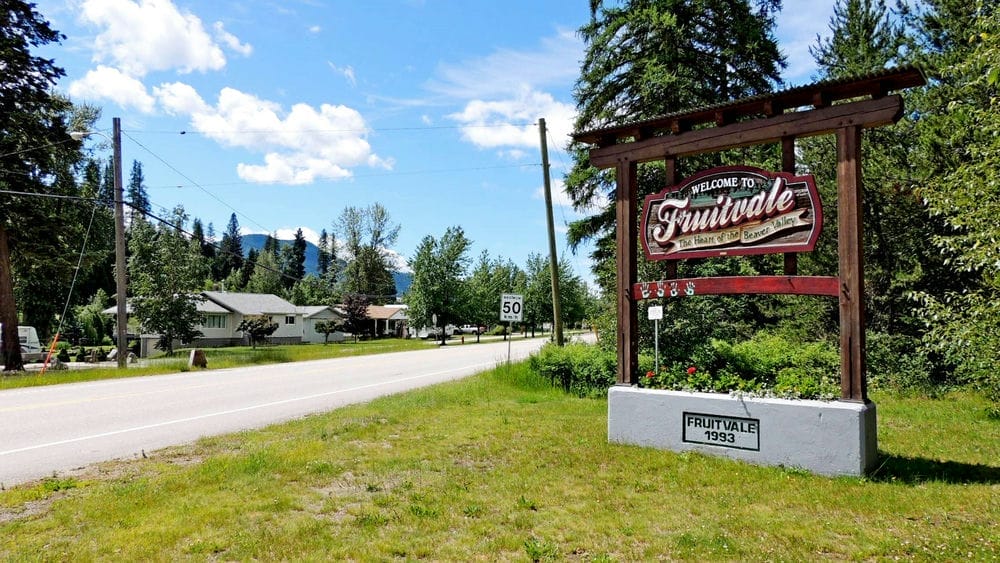
Fruitvale
Lending guidelines for Fruitvale, British Columbia
Last reviewed by Tekamar Mortgage Fund on
Show on MapLending Snapshot
Fruitvale is a quiet bedroom community of under 2,000 people that relies entirely on Trail's industrial smelter economy. It's a stable market, but the lack of local job growth and an aging population means properties can sit if you ever need to sell. Because of that slow exit velocity, we cap our max LTV here at 55.0%.
Fruitvale and the Beaver Valley
Fruitvale is a quiet West Kootenay village of 1,958 residents, occupying a small 2.7-square-kilometre footprint in the Beaver Valley. Unlike high-beta resort markets in the region, Fruitvale behaves as a stable, blue-collar bedroom community. The demographic is older, with a median age of 50 and seniors representing 27% of the population, but a solid 59% core of working-age residents keeps the local housing market grounded.
Employment in the region relies heavily on industrial and service-sector jobs. Manufacturing is the primary economic driver at 18.9%, with many residents commuting to industrial employers in nearby Trail. Healthcare and social assistance accounts for another 14.6% of local employment, followed by retail trade at 11.4% and construction at 10.3%. The village has an overall employment rate of 52.4% and an unemployment rate of 7.0%. While 23.8% of the workforce enjoys a short commute under 15 minutes, the average commute time is 24.3 minutes, reflecting the daily flow of commuters driving to larger employers in the immediate region.
For mortgage brokers, property type and market liquidity are the primary underwriting hurdles. Single-detached homes make up the vast majority of the 881 private dwellings at 72.7%, while low-rise apartments account for 14.0%, and movable homes sit at 4.7%. Row houses do not exist in this market. Overall transaction volume is very low throughout the year. This lack of market depth means that if a borrower defaults, the timeline to foreclose, list, and liquidate a property in a town of this scale is significantly longer than in major urban centres.
Tekamar specializes in non-urban BC markets that traditional institutional lenders often underserve. We appreciate the stability of the industrial job base in the Kootenays, but we must account for the slow market velocity when structuring deals. To manage the extended recovery timeline of a low-volume real estate market, we cap our loan-to-value in Fruitvale at 55.0%.
If you have a client looking to consolidate debt, pay out tax arrears, or bypass the restrictive debt-service guidelines of traditional credit unions, we want to look at the file. As long as there is clear equity and a viable exit strategy, we can build a solution. Just ensure your proposal aligns with our 55.0% LTV limit before submitting.
the Nearest Costco
Nearest Hospital
Frequently Asked Questions
We cap deals at 55.0% LTV because Fruitvale has under 2,000 people and low sales velocity. If we have to foreclose, we need a solid safety margin to cover the carrying costs of a long, patient sales process.
It's a stable, blue-collar town, but it has no economic momentum of its own and relies entirely on Trail's smelter and healthcare sectors. We view it as a highly predictable but slow-growth market, so we don't speculative-lend on future appreciation.
Property type is key—over 72% of the town is single-detached homes owned by an aging demographic over 50. Anything highly specialized or lacking a clear buyer pool will get rejected because the local demographic of younger buyers is just too shallow to support a quick exit.
Our Mortgage Products Available in Fruitvale
| Mortgage Product Name | Max LTV | Key Notes for Fruitvale |
|---|---|---|
| Credit Repair and Debt Consolidation | 55.0% | Standard product terms |
| Variable Income | 55.0% | Standard product terms |
| Bare Land and Unique Properties | 55.0% | Standard product terms |
| Bridge Financing | 55.0% | Standard product terms |
| Equity Lending / Refinance | 55.0% | Standard product terms |
| Purchases | 55.0% | Standard product terms |
Detailed Mortgage Product Information
Credit Repair and Debt Consolidation
Maximum Loan-to-Value (LTV) for Credit Repair and Debt Consolidation in Fruitvale:
55.0 %
“Their credit report reads like a horror novel, but the house was just renovated and is worth a lot…”
Here’s what happens when life takes a wrong turn. A bad business venture. Workplace Injury. That divorce that dragged on for two years. Suddenly your credit score looks like a batting average and the banks won’t even return your calls.
But here’s the thing – none of that changes what your ho...
Variable Income
Maximum Loan-to-Value (LTV) for Variable Income in Fruitvale:
55.0 %
“Their income is all over the map, but there’s definitely income…”
Here’s a funny thing about lending based on Line 15000 of your Notice of Assessment: It’s a neat little box to underwrite against. Works great if you’re a salaried employee. Not so great if you’re running a fishing charter in Campbell River where thres fishing season, and the rest of the year.
We get it. Income isn’t always ti...
Bare Land and Unique Properties
Maximum Loan-to-Value (LTV) for Bare Land and Unique Properties in Fruitvale:
55.0 %
“The appraisal came back as ‘property type: other’…”
Here’s a truth about real estate that nobody wants to admit: not everything fits in a box. Banks have boxes. Nice, tidy boxes labeled “single family home” and “condo” and “townhouse.” Their computer systems literally don’t have a dropdown menu option for “converted church with commercial kitchen” or “geodesic dome on 40 acres.”
We’ve funded...
Bridge Financing
Maximum Loan-to-Value (LTV) for Bridge Financing in Fruitvale:
55.0 %
“Subjects came off their current home last week but their new place closes Friday…”
Here’s a funny thing about bridge financing: everyone thinks it’s complicated. It’s not. Someone needs to close on their new house before their old house sells. Or their sale fell through after they removed subjects on their dream home. Or they found the perfect downsizer condo but haven’t listed the family hom...
Equity Lending / Refinance
Maximum Loan-to-Value (LTV) for Equity Lending / Refinance in Fruitvale:
55.0 %
“They have tons of equity but don’t qualify under B20…”
Here’s the thing about equity lending: it exists because banks literally can’t do it. B20 guidelines require income verification. Full stop. No wiggle room. No common sense exceptions.
We’re provincially regulated. The funds we lend on come from individual investors, not the Bank of Canada. So when your client has 50% equity but their in...
Purchases
Maximum Loan-to-Value (LTV) for Purchases in Fruitvale:
55.0 %
Moving is supposed to be exciting. New town, new job, new chapter. So why do banks act like you’re asking for their firstborn when you need a mortgage?
“You haven’t been at your new job for thre months”
“Your self-employment income doesn’t count in a new market.”
“We need to see established a year if you are part time contract - even if you’re working 40 hours under your new role”
Meanwhile...