For Brokers
Estimate your max LTV in seconds
Pick the town, product, credit score, and how close the property is — we'll show the maximum loan-to-value we can consider. No sign-up, no obligation.
Sayward
Lending guidelines for Sayward, British Columbia
Last reviewed by Tekamar Mortgage Fund on
Show on MapLending Snapshot
Sayward is a tiny, isolated Vancouver Island town of just 300 people, mostly retirees. Tekamar tops out at 55.0% LTV here because the local economy is incredibly weak, meaning it could take over a year to sell a property if things go south. If your client has massive equity and pension income, we can talk, but expect a tight squeeze.
Lending in Sayward: A Practical Guide for Brokers
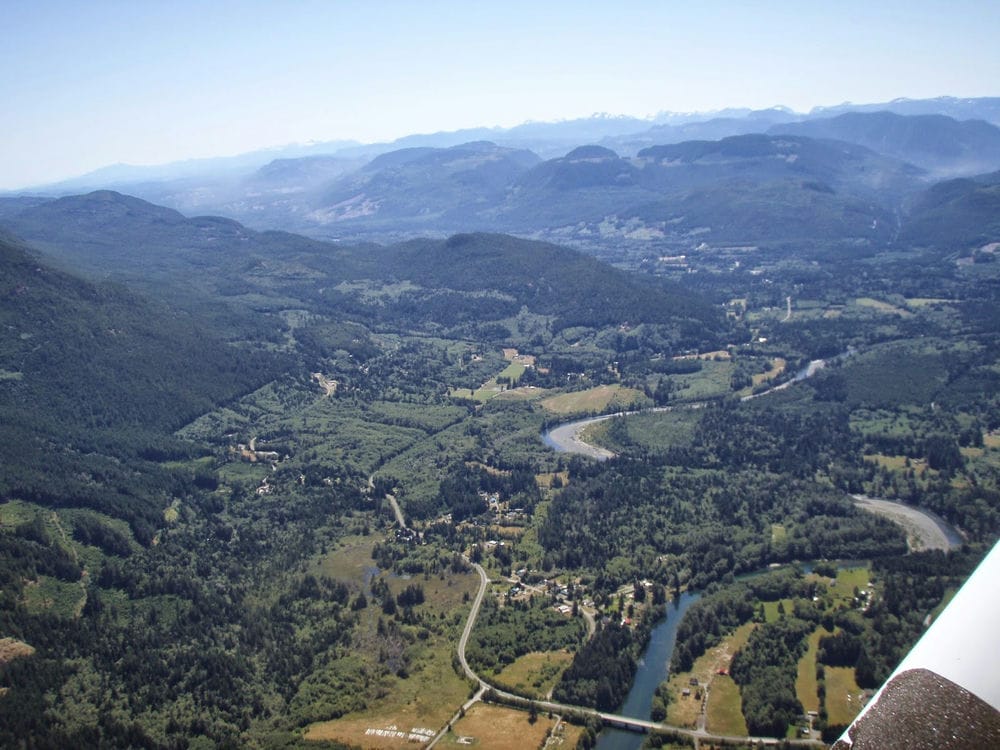
Sayward is a small coastal community on the northeast coast of Vancouver Island, with a population of 334 residents. Located north of Campbell River, this market lacks any suburban sprawl, consisting instead of a small residential footprint across a land area of 4.44 square kilometers. For mortgage brokers, navigating a deal in this market requires a clear understanding of the local demographic and housing constraints.
The housing inventory is highly specific and limited. Single-detached homes make up 76.5% of the market, while movable dwellings represent 8.8% and low-rise apartments account for 14.7%. There are no duplexes or row houses in the community. The local housing market is exceptionally thin, with only 182 total private dwellings. Because properties rarely change hands and the population density is only 75.2 people per square kilometer, establishing reliable local comparables is a constant challenge for appraisers.
Demographics shape the local economy and borrowing profiles. The median age in Sayward is 60 years, with seniors aged 65 and older making up 38% of the population. The working-age cohort stands at 52%, while youth under 15 make up 9%. The local economy relies heavily on primary industries, with agriculture, forestry, fishing, and hunting employing 26.1% of the workforce. Public administration, accommodation, transportation, and recreation each account for 8.7% of local employment.
Economic indicators reflect the community’s seasonal and remote nature. The employment rate is 36.4%, with an unemployment rate of 16.7%. The median household income is recorded at $55, and the average commute time is 41.0 minutes, reflecting the distance residents must travel to regional hubs for employment, medical care, and retail. Due to these factors, we assign Sayward an Economic Score of 4/10 and a Community Desirability Score of 7/10.
Traditional institutional lenders routinely auto-decline files in Sayward because of its remote location and limited liquidity. At Tekamar, we look at these deals differently. We manage risk by evaluating foreclosure timelines, carrying costs, and the extended marketing periods typical of a quiet real estate market. To protect investor capital while still providing viable solutions for brokers, we cap our maximum loan-to-value in Sayward at 55.0%.
This 55.0% limit provides the necessary equity buffer to offset market illiquidity. We do not rely on automated credit scoring or computer-generated valuations. Instead, we evaluate the tangible real estate and the borrower’s exit strategy. Whether your client is an established local contractor looking for a bridge loan or a retiree seeking equity release for renovations, we will review the file. If the equity supports our 55.0% limit, we can put a deal together.
the Nearest Tim Hortons
the Nearest Costco
Nearest Hospital
Frequently Asked Questions
We cap lending at 55.0% LTV because Sayward is a highly illiquid market with just 334 residents. If a deal goes sideways, it could easily take us a year or more to find a qualified buyer and recover our capital.
With 16.7% unemployment and high reliance on government transfers, the local job market is too fragile to support a mortgage. To get a deal done, your borrower needs a rock-solid income stream that is completely independent of the town, like a stable pension or significant outside assets.
A low equity position or a borrower relying on local employment will sink the file instantly. If they don't have a 45% down payment and a clear, outside source of income, we won't touch it.
Our Mortgage Products Available in Sayward
| Mortgage Product Name | Max LTV | Key Notes for Sayward |
|---|---|---|
| Variable Income | 55.0% | Standard product terms |
| Bare Land and Unique Properties | 55.0% | Standard product terms |
| Bridge Financing | 55.0% | Standard product terms |
| Equity Lending / Refinance | 55.0% | Standard product terms |
| Purchases | 55.0% | Standard product terms |
Detailed Mortgage Product Information
Variable Income
Maximum Loan-to-Value (LTV) for Variable Income in Sayward:
55.0 %
“Their income is all over the map, but there’s definitely income…”
Here’s a funny thing about lending based on Line 15000 of your Notice of Assessment: It’s a neat little box to underwrite against. Works great if you’re a salaried employee. Not so great if you’re running a fishing charter in Campbell River where thres fishing season, and the rest of the year.
We get it. Income isn’t always ti...
Bare Land and Unique Properties
Maximum Loan-to-Value (LTV) for Bare Land and Unique Properties in Sayward:
55.0 %
“The appraisal came back as ‘property type: other’…”
Here’s a truth about real estate that nobody wants to admit: not everything fits in a box. Banks have boxes. Nice, tidy boxes labeled “single family home” and “condo” and “townhouse.” Their computer systems literally don’t have a dropdown menu option for “converted church with commercial kitchen” or “geodesic dome on 40 acres.”
We’ve funded...
Bridge Financing
Maximum Loan-to-Value (LTV) for Bridge Financing in Sayward:
55.0 %
“Subjects came off their current home last week but their new place closes Friday…”
Here’s a funny thing about bridge financing: everyone thinks it’s complicated. It’s not. Someone needs to close on their new house before their old house sells. Or their sale fell through after they removed subjects on their dream home. Or they found the perfect downsizer condo but haven’t listed the family hom...
Equity Lending / Refinance
Maximum Loan-to-Value (LTV) for Equity Lending / Refinance in Sayward:
55.0 %
“They have tons of equity but don’t qualify under B20…”
Here’s the thing about equity lending: it exists because banks literally can’t do it. B20 guidelines require income verification. Full stop. No wiggle room. No common sense exceptions.
We’re provincially regulated. The funds we lend on come from individual investors, not the Bank of Canada. So when your client has 50% equity but their in...
Purchases
Maximum Loan-to-Value (LTV) for Purchases in Sayward:
55.0 %
Moving is supposed to be exciting. New town, new job, new chapter. So why do banks act like you’re asking for their firstborn when you need a mortgage?
“You haven’t been at your new job for thre months”
“Your self-employment income doesn’t count in a new market.”
“We need to see established a year if you are part time contract - even if you’re working 40 hours under your new role”
Meanwhile...