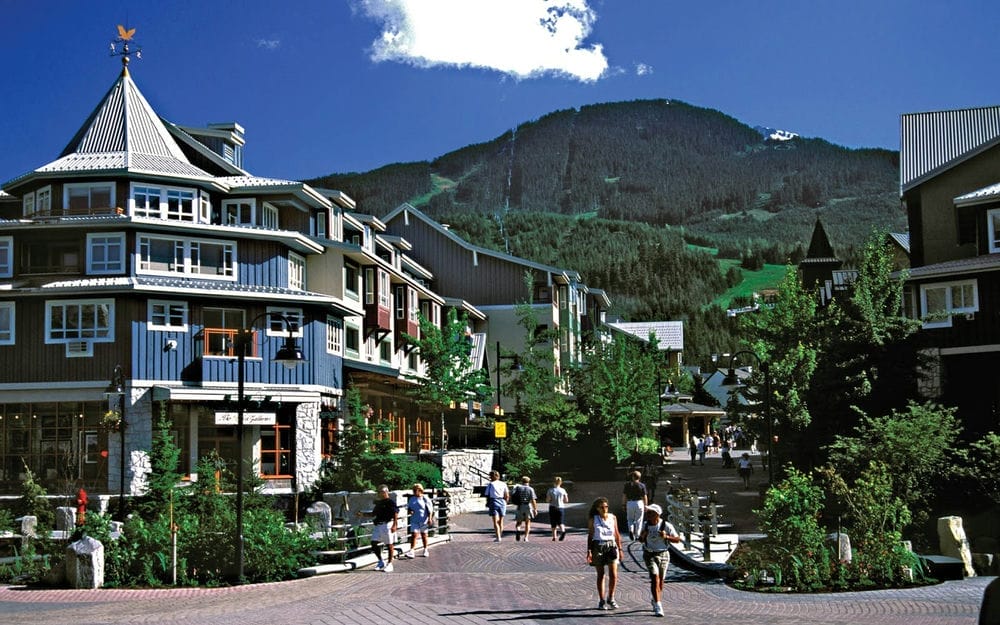
Whistler
Lending guidelines for Whistler, British Columbia
Last reviewed by Bridgefort Capital on
Show on MapLending Snapshot
Whistler is a world-class resort hub, but its extreme reliance on tourism makes it too volatile for us. Because the local economy is highly seasonal and properties are mostly discretionary luxury assets, our max LTV here is 0.0%. We don't fund deals in this market.
Let us analyze the Whistler market from a pure risk perspective. On paper, the community looks like an economic powerhouse. The population has grown 19.0% since 2016, reaching 13,982 residents. It is a highly educated demographic, with 73.2% holding post-secondary credentials and 41.2% carrying a Bachelor’s degree or higher. But as any broker who has tried to write a deal here knows, the underlying economic fundamentals do not align with standard residential lending models.
The local economy is heavily weighted toward tourism and service. Accommodation and food services dominate the employment landscape at 27.5%, followed by construction at 10.2%, and retail trade at 9.1%. This reliance on seasonal, service-industry employment shows up in the macro metrics: the local unemployment rate sits at a high 17.5%, despite a 66.8% overall employment rate. More surprisingly, official community metrics report a median household income of just $99. While this likely reflects tax-optimized corporate structures or transient workers reporting minimal domestic income, it highlights a massive disconnect. You cannot qualify a local buyer using standard debt-service ratios when local incomes are decoupled from multi-million dollar property valuations.
The physical housing inventory also presents liquidity challenges. Single-detached homes make up only 29.7% of the market. The remainder of the inventory is highly dense and non-traditional: 26.3% row houses, 24.6% apartments under five storeys, and 10.1% duplexes. A significant portion of these units operate under restrictive covenants, nightly rental pools, or quarter-share ownership structures.
At Bridgefort Capital, our lending philosophy is straightforward. We are the MIC for towns without stoplights. We look for stable, predictable, blue-collar markets where real estate values are anchored by a diversified local economy. We focus heavily on capital preservation and clean exit strategies. In the event of a default, we need to know we can liquidate a property quickly. High-end resort markets with seasonal volatility, high unemployment rates, and luxury price tags do not fit this profile.
While the community scores an 8/10 for desirability, its economic score sits at 5/10. The combination of high seasonal employment volatility, a narrow economic base, and complex zoning makes it an unacceptable risk for our fund. For these reasons, Whistler is an excluded lending area. Our maximum LTV for this community is 0%. If you are looking to place a deal in this market, you will need to source alternative capital.
the Nearest Costco
Nearest Hospital
Frequently Asked Questions
Our max LTV is 0.0% because Whistler is dominated by discretionary vacation properties rather than primary homes. In a market downturn, liquidating these luxury assets takes too long and carries too much risk for our equity-based model.
The economy is entirely dependent on tourism, leading to extreme seasonal volatility and a high 17.5% unemployment rate. This lack of economic diversification means we can't comfortably mitigate risk, so we don't write deals here.
Simply being located in Whistler will sink the deal. Because of the resort-dependent economy and the risk of a flooded market during a downturn, we do not fund any properties in this area.
Our Mortgage Products Available in Whistler
No Mortgage Products Available Yet
Unfortunately, we currently don't have any mortgage products listed for Whistler.
Please check back soon, or contact support if you need assistance.